WORDS
Books bring new words
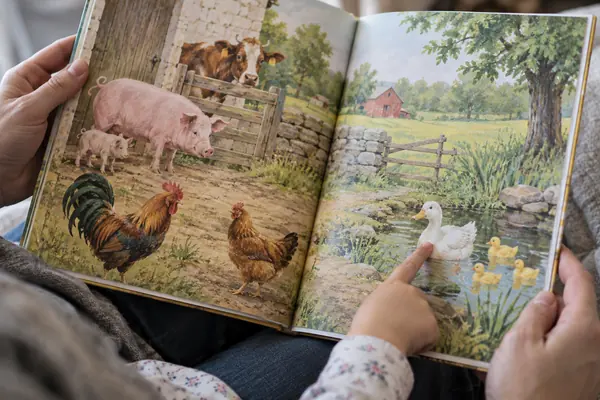
An Ohio State study found picture books average 228 words and use more complex words than everyday conversation.
Count the words doodlestorybook

WHAT THE RESEARCH SAYS
Books carry words that everyday talk rarely reaches.
A daily picture book adds up to hundreds of thousands of words before school. UK reading charities say the best way to share one is little and often, with plenty of talk about the pictures.
LITTLE and often
Count the wordsTHE SHORT ANSWER
Shared books build vocabulary and talk.
How you read matters as much as how often.
WORDS
An Ohio State study found picture books average 228 words and use more complex words than everyday conversation.
Count the wordsTALK
Education guidance describes shared reading as stopping to talk with the child: asking, answering, then adding a little more.
How to share a bookBEDTIME
The National Literacy Trust's tips say little and often is best, such as a daily story at bedtime or bath time.
See the numbers
FOUR WAYS TO SHARE A BOOK
These come from the National Literacy Trust's tips and the Education Endowment Foundation's early years guidance. None of them needs a perfect reading voice.
Switch off the TV or radio so your child can hear you without distractions.
You do not always need to read the words. Chat about what you see, in your home language if it is not English.
Ask a question, respond to the answer, expand it with a new word or detail, then ask again so they can say the fuller version.
Repetition helps children understand and remember language, so the hundredth reading still counts.
TWO NUMBERS WORTH KNOWING
One figure on what a daily book adds up to,
one on the families who are missing out.
296,660 words
Words heard from one book a day, by age 5
Ohio State researchers calculated this from the most-borrowed board books and picture books at a US library. A child never read to would hear 4,662.
BOOK WORDS · OHIO STATE
23%
Low-income families not sharing books before age one
BookTrust's 2022 survey of 2,148 caregivers in low-income households found this, even though 95 percent saw reading as important.
FIRST YEAR · BOOKTRUST
BookTrust found daily shared reading peaks between two and four years of age and then declines. Its parents' most common barriers were finding reading with their child not easy (28 percent), not feeling confident choosing books (21 percent) and lack of time (20 percent).
A QUICK WORD COUNT
Pick how often a child is read to. The figure is the number of words researchers calculated a child would hear from books alone by age five.
Calculated by Ohio State University researchers from popular board books and picture books. Everyday talk adds many more words; these are book words only.
FROM THE FIRST YEAR
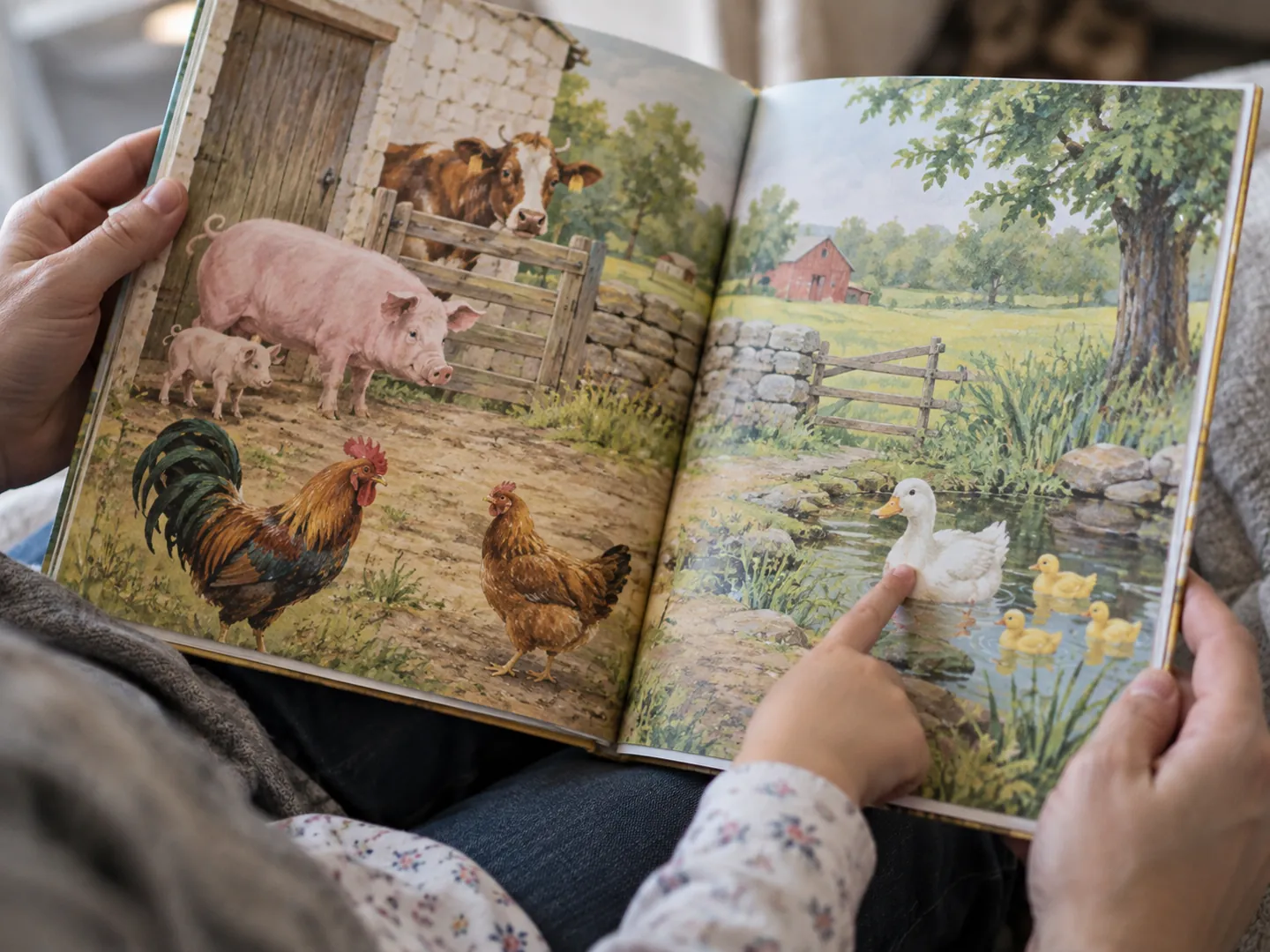
BookTrust says sharing books, stories and rhymes from an early age supports children's development and can help bonding, and that its Bookstart scheme has given a free book pack to babies in their first year since 1992.
With babies, the National Literacy Trust suggests leaving time for a response. Babbling, arm waving or pointing all show interest, and there is no need to pressure a child to name things: name them yourself, and praise and repeat if they try.
Questions
UK reading charities encourage sharing books, stories and rhymes from an early age. BookTrust's Bookstart scheme gives a free book pack to babies in their first year, and its survey found 77 percent of families start sharing books before the first birthday.
No. The National Literacy Trust's tips say you do not always need to read the words: talking about the pictures counts, and you can use your own language if it is not English.
There is no set length in the guidance. The National Literacy Trust says little and often is best, for example a daily story at bedtime or bath time.
Repetition is useful. The National Literacy Trust says sharing favourite books again and again helps children understand and remember language.
A Department for Education blog, citing the National Literacy Trust, says children read to regularly at age five did better in maths, vocabulary and spelling tests at 16 than those who were not. BookTrust says high achievers from disadvantaged backgrounds are twice as likely to have been read to early on.
Updated
ABOUT THIS NAME
doodlestorybook.com is part of the DoodleSale portfolio. It isn't in an auction right now, but you can ask about leasing it.